
Rating: 5 out of 5.
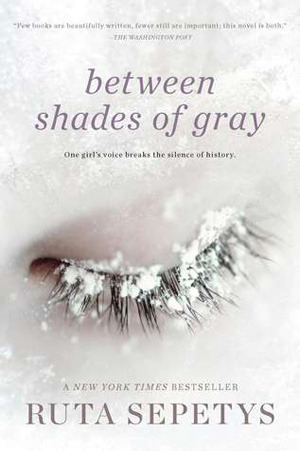
Some books are difficult to read because they are slow or hard to get into. Others are difficult because of the emotional weight they carry. Between Shades of Gray by Ruta Sepetys is definitely the second kind. This is not an easy book to read, but it is an important one, and it is the kind of historical fiction that stays with you long after you finish it.
I would recommend this book to anyone who enjoys historical fiction that is emotional, character-driven, and rooted in real history. It is heartbreaking, beautifully written, and deeply moving without ever feeling overly dramatic. Ruta Sepetys tells a devastating story, but she does it with so much care that the book feels both deeply personal and unforgettable.
A Story Rooted in Devastating History
Between Shades of Gray follows fifteen-year-old Lina Vilkas, a Lithuanian girl whose life changes overnight when Soviet officers force her, her mother, and her younger brother Jonas out of their home. They are deported to Siberia, where they face brutal conditions, starvation, fear, and constant uncertainty. As Lina and her family struggle to survive, Lina clings to her art, her memories, and the hope that her father will somehow find them.
One of the things that makes this book stand out is that it focuses on a part of history that is not talked about nearly enough. The mass deportations and suffering of Lithuanians, Latvians, and Estonians under Stalin is not something I had seen explored much in fiction before reading this. Ruta Sepetys does such a good job of making that history feel immediate and personal rather than distant. Through Lina’s perspective, the reader does not just learn about what happened, but feels the fear, grief, and uncertainty right alongside her.
The Impact
What stood out to me most while reading this novel was how human it feels. This is a story about cruelty, survival, and loss, but it never reduces its characters to only their suffering. Lina, her mother, Jonas, and the people around them all feel like fully developed individuals with fears, strengths, and personalities of their own. That made the story even more painful at times, because these characters never feel distant. They feel real.
Lina was such a compelling main character to follow. She is strong, but not in a way that feels unrealistic. She is frightened, angry, grieving, and still trying to hold onto hope, which made her feel all the more believable. I especially appreciated the role her artwork played throughout the novel. Her drawings are not just a detail added to her personality—they become part of the way she survives, remembers, and resists being erased. In a story where so much is taken from these characters, Lina’s art becomes one of the few things she can still claim as her own.
Her mother was another character who left a huge impression on me. There is a quiet strength to her that runs through the entire novel. She is not written as someone fearless or untouched by what is happening, but rather as a mother trying to protect her children in impossible circumstances. Some of the most emotional moments in the book came from watching the choices she made to keep Lina and Jonas alive. She carries so much of the emotional heart of this story.
The Emotional Weight of the Novel
This is one of those books that hurts in a very specific way because you know the events in it are inspired by real suffering. There were so many moments in this novel that were hard to get through, not because they were poorly written, but because they were written well enough to make the horror of the situation feel real. The cold, the hunger, the dehumanization, the fear of losing family members, and the constant uncertainty all create a heavy emotional atmosphere that never really lets up.
At the same time, I appreciated that the novel does not feel hopeless. There are still moments of compassion, resilience, and love throughout the story. Those moments matter so much because they remind the reader that even in the middle of terrible situations, people still hold onto love, hope, and humanity. That balance is part of what makes the book so effective, I believe. It never softens the reality of what these people suffered, but it also never forgets that they were people first.
Ruta Sepetys’ Writing Style
Ruta Sepetys’ writing is one of the biggest reasons this book works as well as it does. Her writing is accessible without feeling too simple, and she knows how to make the story emotional without pushing it into melodrama. She does not overdo anything. Instead, she lets the horror of what is happening speak for itself, which honestly makes the emotional moments hit even harder.
I also thought the pacing worked really well for this story. The book moves swiftly, but it still gives the emotional moments enough space to be impactful. There is always this underlying tension because Lina and her family are never truly safe, and that keeps the story compelling even in the quieter moments. It kept me on the edge of my seat. It kept me reading because I was so emotionally invested in what would happen to the characters.
Final Thoughts
Looking back on Between Shades of Gray now, I think part of why it has stayed with me for so long is because of when I first read it. I read this book in 7th grade, and I still remember how much it affected me. It was one of those books that really opened my eyes to how powerful historical fiction can be. Not only was it heartbreaking and emotional, but it also introduced me to a history I knew very little about at the time and have never forgotten since.
Even now, years later, it is still one of the historical fiction books that has stuck with me the most. If you are looking for something light, this probably is not the book I would hand you. But if you enjoy historical fiction that is meaningful, emotional, and centered on resilience in the face of unimaginable cruelty, I absolutely recommend this one. It is a beautifully written novel that tells an important story, and it is one I still think about years after reading it.
 Jody Bullis Writing